Stop Guessing Your Kilostat Solar Financial Model. Learn what the numbers really mean.
The Kilostat Solar Sizing Calculator produces a 25-year financial projection based on the information you enter. It estimates system cost, annual savings, cumulative savings, return on investment, and the year the system pays for itself. For many users, those figures appear on the screen and immediately raise a new question:
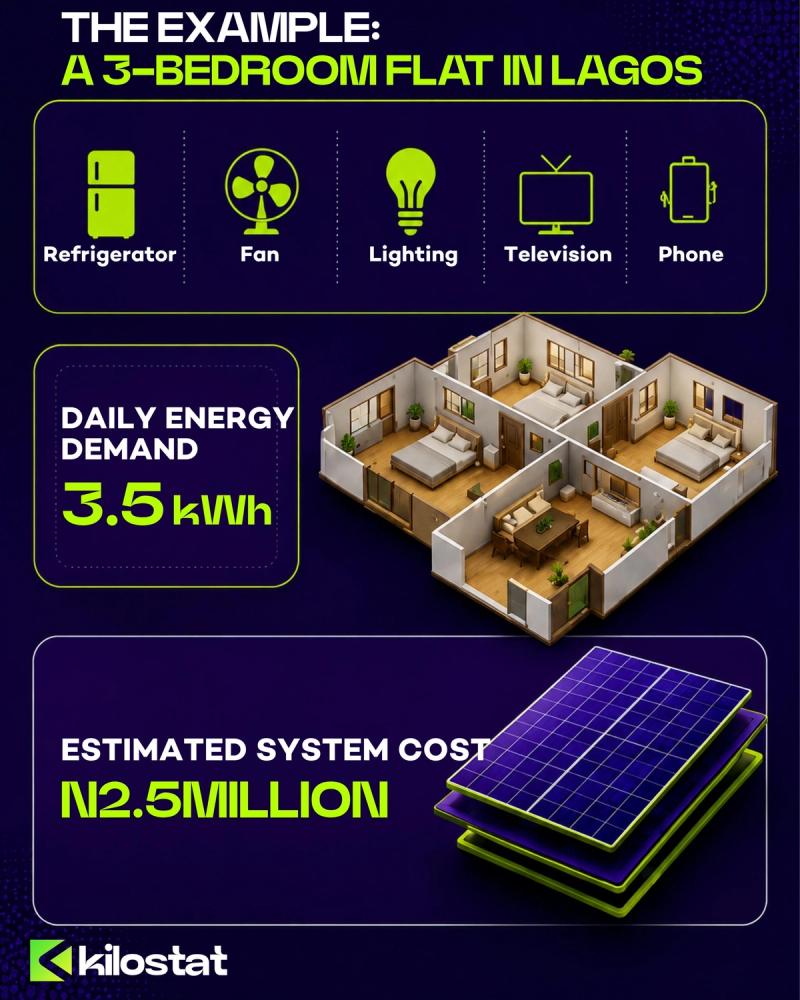
Consider a calculator run for a modest three-bedroom flat in Lagos. The household uses a refrigerator, four ceiling fans, LED lighting, a television, and regular phone charging, producing a daily energy demand of about 3.5 kWh. Using those inputs, the calculator estimates a solar system cost of roughly N2.5 million.
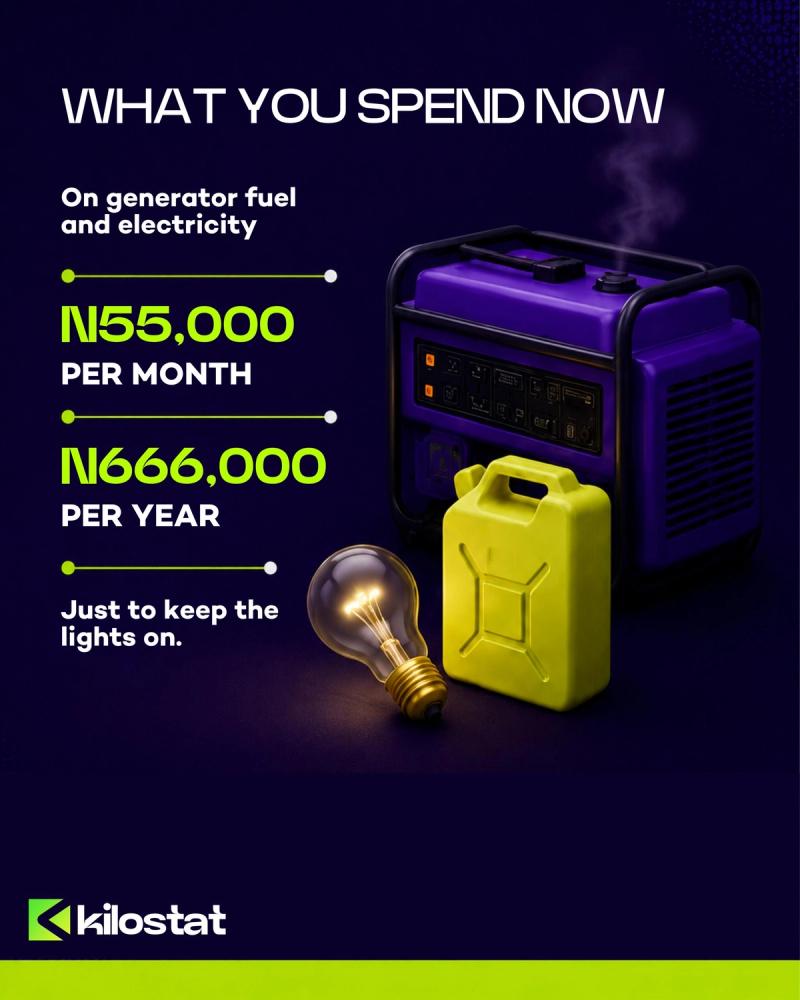
The same example assumes the household currently spends about N55,000 each month on generator fuel and electricity. Over a year, that adds up to N660,000 spent simply to keep the lights on.
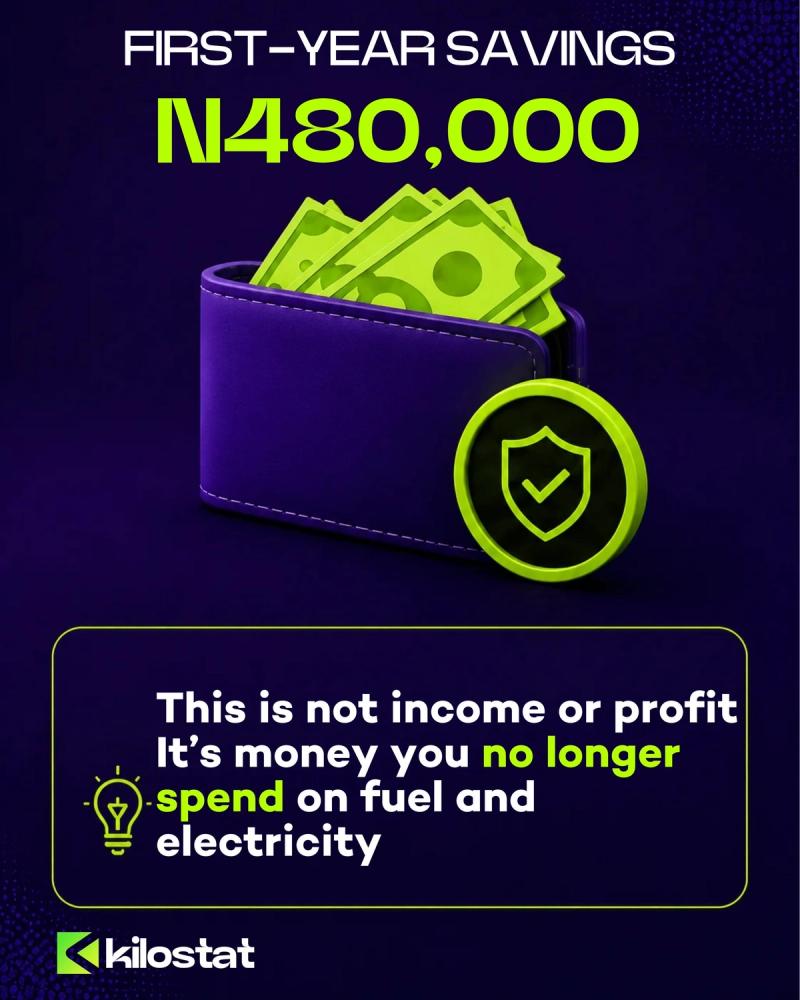
The calculator estimates first-year savings of around N480,000. That figure is easy to misunderstand, as it is not income; neither is it profit, but money that would otherwise have been spent on fuel and electricity but is no longer leaving the household because solar has taken over part of that energy demand.
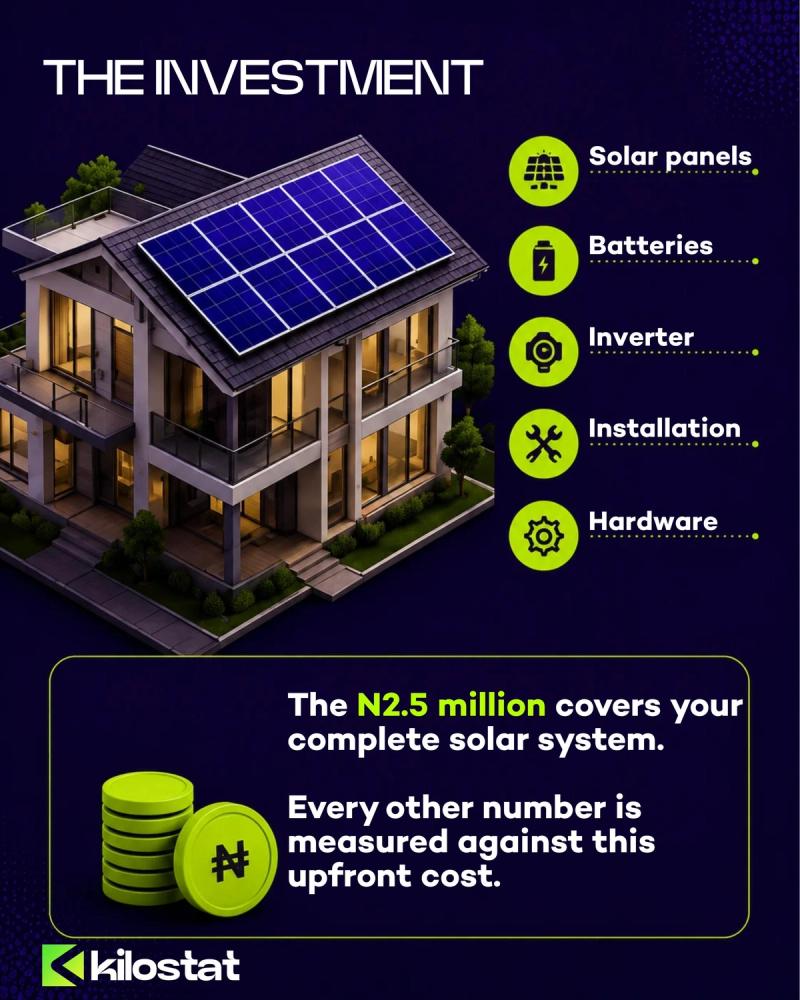
The N2.5 million system cost is the investment itself. It includes the panels, batteries, inverter, installation, and associated hardware. Every other number in the model is measured against that upfront cost.
As the years pass, the calculator adds up the savings generated by the system. The break-even point arrives when those accumulated savings equal the original investment. In this example, that happens around year five.
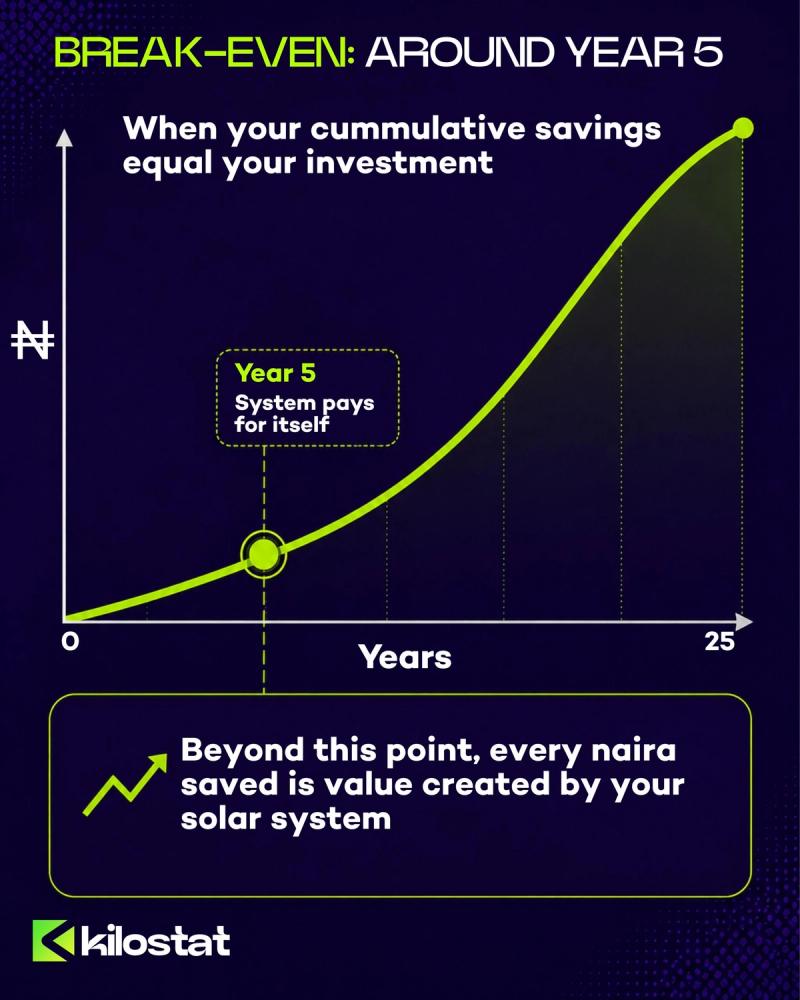
By that stage, the household has effectively recovered the cost of the system through reduced energy spending. Any additional savings beyond that point represent value created by the asset.
The return on investment figure looks further ahead. Rather than asking whether the system has paid for itself, it asks how much value the system generated over the full projection period relative to what was originally spent.
A positive ROI means the savings exceeded the cost. A negative ROI means they did not.
That outcome surprises some people, but it should not. Solar is not automatically a good investment for every household. Low electricity consumption, reliable grid supply, or an oversized system can all weaken the financial case. One of the calculator's most useful functions is that it shows when the economics are not compelling enough to justify the expense.
The 25-year projection period reflects the expected operating life of quality solar panels. The model does not simply assume a static savings figure held constant across that period, but factors in future repair and maintenance costs, battery and inverter replacement, inflation, and the rising cost of grid electricity and generator fuel over time.
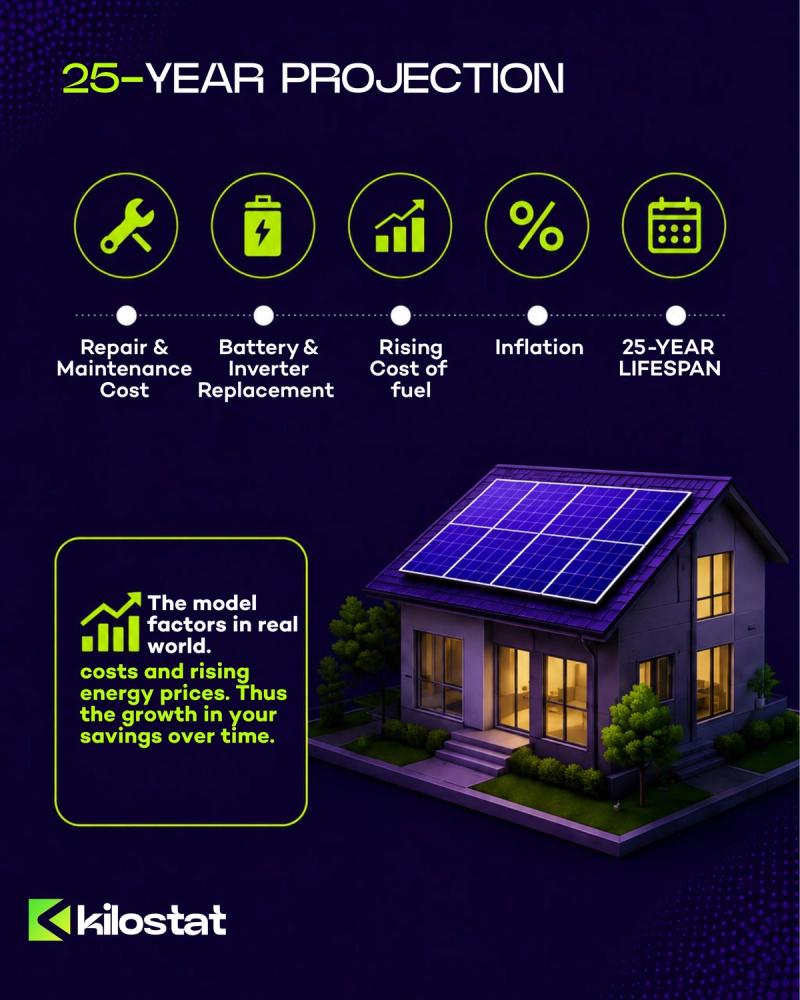
That is why the cumulative savings curve slopes upward as the years advance. The cost of energy that the household avoids becomes more expensive each year, which means the value of having solar increases alongside them.
Most households will never make a decision based on a return-on-investment figure twenty-five years into the future. The more immediate question is usually the simpler one: how long will it take before the money currently being spent on fuel and electricity equals the cost of installing solar?
That is why the break-even year tends to matter more than any other figure in the model. It connects the cost of the system directly to the spending it is designed to replace.
The calculator can only tell you what happens if the assumptions entered into the model are true
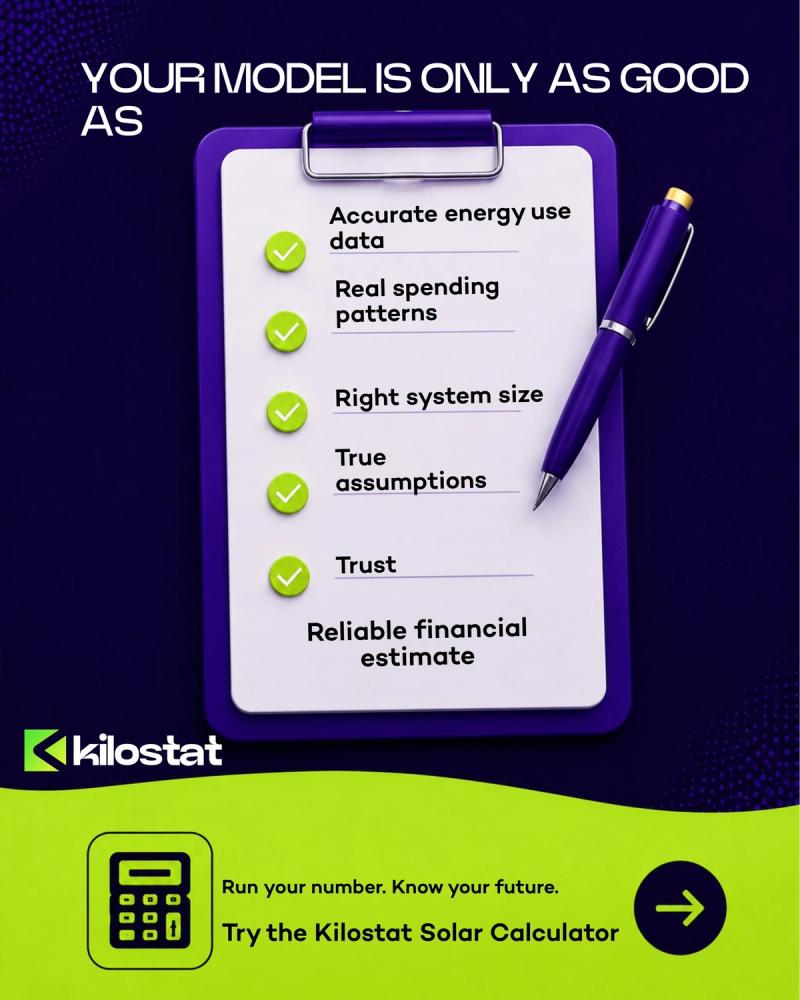
If the inputs accurately reflect how your household uses energy, the outputs are not predictions but a financial estimate of what that pattern of energy consumption is likely to cost over time and what it might look like to replace part of it with solar.
Source: Kilostat Solar Sizing Calculator, 25-year financial model output, Lagos three-bedroom household scenario, 2026.

Fabian Omini
Energy Analyst
Fabian Omini is an energy analyst with a keen interest in translating complex energy and finance topics into clear, accessible narratives for everyday Africans.