The rainy season is one of the most common reasons Lagos households hesitate on solar. The concern is understandable, but the numbers tell a different story...
How Rainy Season Makes Solar a Wasted Investment.
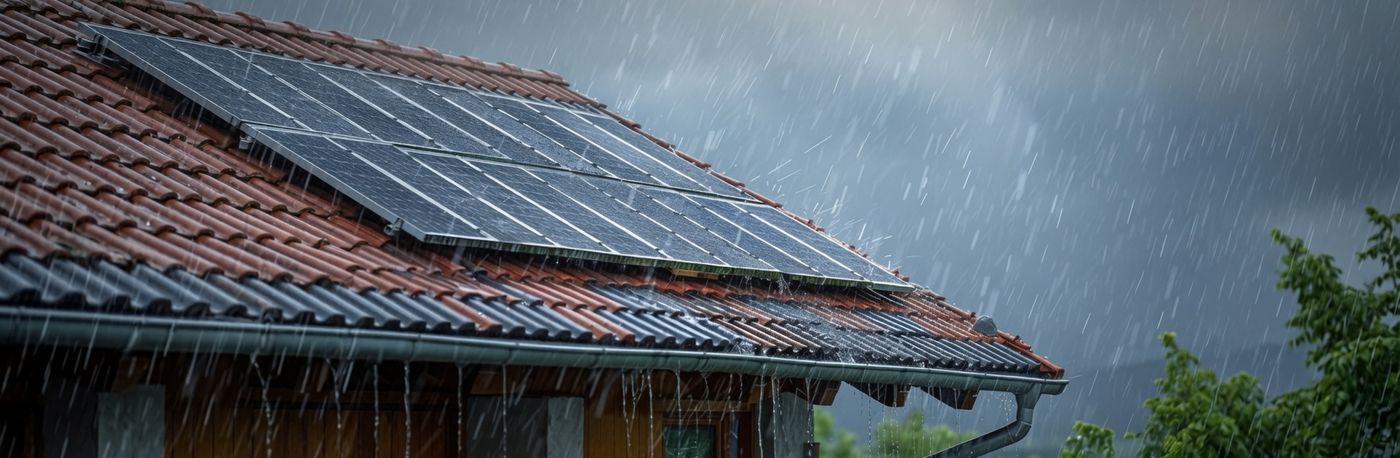
One of the most common concerns about solar in Lagos is the rainy season. The logic seems straightforward: if the sky is cloudy for months, what exactly is the system doing? It is a fair question, and the answer is more reassuring than most people expect.
Lagos receives between 3.8 and 4.2 peak sun hours per day on an annual average. During the dry season, particularly between December and February, that figure can rise to between 5.0 and 5.5 hours. In July, typically one of the cloudiest months of the year, it can fall to between 2.8 and 3.2 hours, according to SurgePV's Lagos Solar Guide, using data consistent with broader solar resource databases. That represents roughly 40% less solar generation than during the dry-season peak.
Now, what’s this fancy phrase called peak sun hours?
Peak sun hours are not the number of hours the sun is visible. They measure the amount of usable solar energy available during the day, expressed as the equivalent number of hours of full midday sunlight. That is why a cloudy day can produce much less electricity than a clear day, even when both have similar daylight hours. During Lagos' rainy season, cloud cover reduces the intensity of sunlight reaching solar panels, lowering the amount of electricity they can generate.
When installers size a system using Lagos' annual average solar resource, they are designing around typical conditions across the year. However, for households seeking year-round solar performance with minimal generator dependence, sizing around the worst months of the year often produces better results than sizing solely around annual averages. Using July's solar resource as a planning benchmark helps ensure the system can continue meeting demand even when sunlight is at its lowest.
The logic is simple
If the system performs adequately during the most challenging solar month, it will generally perform even better during the rest of the year. The result is more energy production, stronger battery performance, and greater resilience during periods of poor weather.
The consequence of undersizing becomes most visible when demand for backup power increases. During the rainy season, storms and flooding can place additional pressure on electricity infrastructure and may contribute to more frequent faults or longer restoration times in some areas. A household with an undersized solar system is therefore more likely to return to generator use during exactly the period when it expected solar to provide the greatest relief.
How much a solar system saves ultimately depends less on what it produces on any single day and more on how much diesel or generator fuel it displaces over time. Even when operating below dry-season output levels, a properly sized system continues generating electricity, reducing fuel consumption, and delivering savings.
The rainy season is not the enemy of solar in Lagos. An undersized system is. Use our solar sizing calculator now to estimate the right system that matches your household's needs throughout the year.
Sources: SurgePV Lagos Solar Guide (2026); GVE Group, Solar Energy Facts Every Nigerian Should Know (2026); Kilostat Solar Sizing Calculator.

Fabian Omini
Energy Analyst
Fabian Omini is an energy analyst with a keen interest in translating complex energy and finance topics into clear, accessible narratives for everyday Africans.