Dust can limit solar panel output in dusty Nigerian conditions. Studies from Maiduguri and Zaria show how soiling reduces power and when cleaning is worth it.
How Much Electricity Does Dust Cost a Solar Panel?
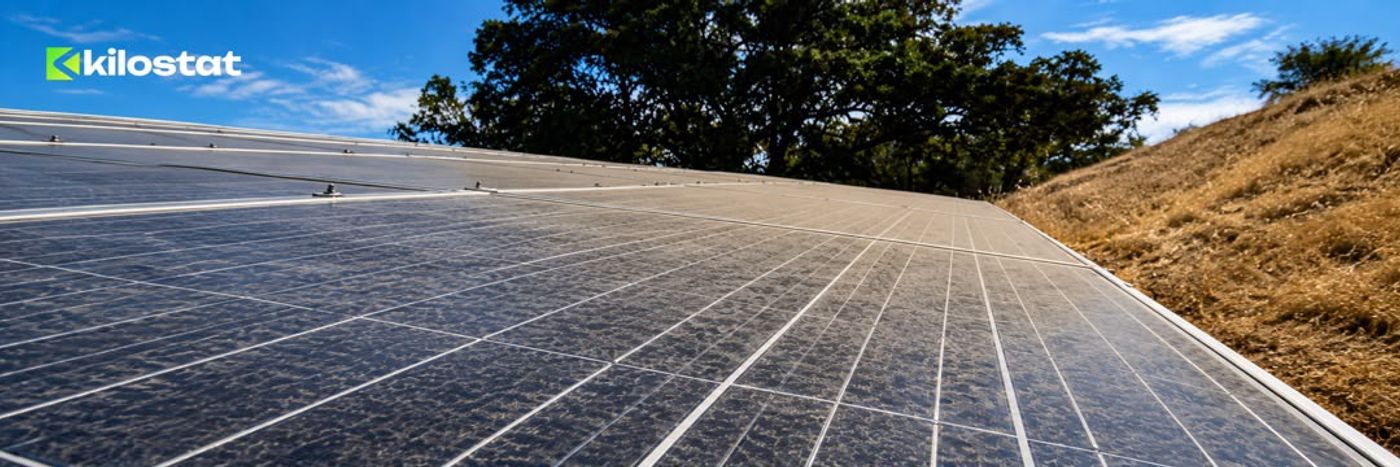
Solar panels spend their working lives outside, which means they are exposed to whatever the environment throws at them. In Nigeria, that includes dust, particularly during the dry season and in places where panels are close to unpaved roads, construction sites or other sources of airborne particles. A layer of dust on the glass may not look like much, but it reduces the amount of sunlight reaching the cells underneath. How much electricity is lost depends on the amount of dust, the type of particles, how long they remain on the panel and the conditions around the installation.
A field experiment in Maiduguri shows how quickly the loss can build up under sustained dusty conditions. Researchers monitored a solar PV module for 14 days while dust accumulated on its surface and recorded more than 50% loss in power output by the end of the experiment. The module's measured efficiency fell from 17.1% on the first day to 7.2% on the fourteenth day. That is not a figure that should be applied to every Nigerian rooftop, since the experiment was carried out under particular conditions in Maiduguri, but it shows what prolonged dust accumulation can do to a panel's output.
Research from Samaru, Zaria found a similar relationship between dust and electricity production, although the size of the reduction depended on what was sitting on the panels. Researchers tested sandy soil, loamy soil and ash on commercial photovoltaic modules and found that 5 grams of accumulated dust reduced power output by up to 27%, while 10 grams produced reductions of up to 37%, depending on the material. Ash caused the largest reductions in the experiment. The researchers also found that stronger solar irradiation reduced the relative effect of the dust, although it did not remove it completely.
There is no single number for how much dust costs a solar system because Nigerian locations do not experience the same conditions. A study covering seven locations across the country found substantial differences in soiling depending on where the panels were installed and the angle at which they were positioned. The researchers measured the amount of light blocked by accumulated particles rather than the electricity produced by a complete household system, which is an important distinction. Their results nevertheless show why a dust-loss figure from one location should not automatically be used to estimate the performance of a solar installation somewhere else.
For a homeowner, the practical question is therefore not whether every solar panel needs to be cleaned every week.
It is whether the conditions around the installation are causing enough soiling to make a noticeable difference to production
A house beside an unpaved road, for example, may accumulate dust much faster than one in a cleaner environment. Comparing the system's output before and after cleaning can provide a useful indication of whether accumulated dirt is becoming a meaningful source of energy loss.
The panels themselves may be designed to operate for decades, but that doesn't mean they will produce the same amount of electricity every day without attention. Dust is one of the simplest factors to overlook because the panels can still look perfectly functional while producing less than they could under cleaner conditions. In parts of Nigeria where soiling is heavy, keeping the panels clean can therefore be less about making the roof look better and more about recovering electricity that has already been paid for through the cost of the system.
Sources
- Minna International Journal of Science and Technology — field study measuring the effect of dust accumulation on solar PV output in Maiduguri, northeastern Nigeria.
- Nigerian Journal of Engineering — study examining the effect of different types and quantities of dust on photovoltaic panels in Samaru, Zaria.
- Renewable Energy — study mapping solar-panel soiling and optical losses across seven locations in Nigeria.

Fabian Omini
Energy Analyst
Fabian Omini is an energy analyst with a keen interest in translating complex energy and finance topics into clear, accessible narratives for everyday Africans.