Solar panels alone don’t keep the lights on when NEPA fails. The inverter decides. Learn the difference between grid-tied, off-grid and hybrid systems in Nigeria.
Not Every Solar System Keeps the Lights On During a Blackout
One of the biggest assumptions people make when installing solar is that power outages become a thing of the past. It's an understandable conclusion to reach. If solar panels generate electricity from sunlight, a sunny afternoon should be enough to keep the house running regardless of what happens to the national grid.
A family in Lekki found out otherwise the evening NEPA went out and their two week old panels, sitting in full afternoon sun just hours earlier, did nothing for the darkened sitting room. The television, fans and freezer went quiet along with the rest of the street. For a moment it felt like the system had failed. It hadn't. The panels were fine. The difference was in a component that rarely gets a mention during the sales pitch:
The Inverter
The inverter determines how electricity moves through a solar installation. It converts what the panels generate into a form appliances can use, but its real job is deciding where power comes from at any given moment, the panels, the batteries or the grid, and what happens the instant one of those sources disappears.
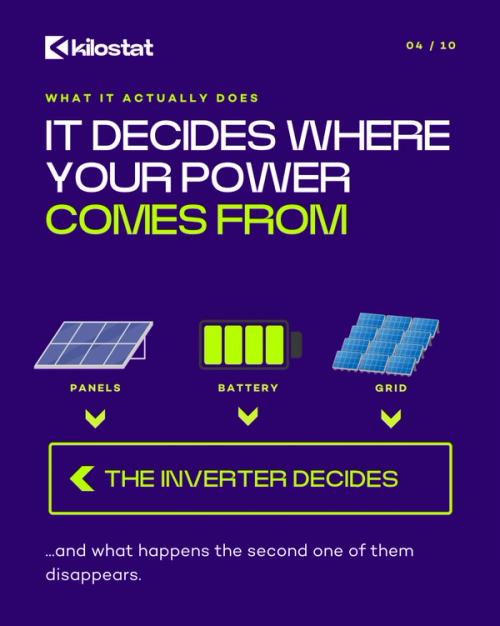
That decision is why two homes with nearly identical panels can behave completely differently during the same blackout. One keeps running. The other goes dark. The inverter and not the panel explains that gap.
Grid-tied
A grid-tied inverter is built to work alongside the national grid and nothing else. During the day it feeds solar power into the house to cut down what's being drawn from the distribution company, and for as long as the grid holds, that's all it needs to do. It also sends extra solar power back into the public grid when you make more than you use. The moment the grid fails, the inverter shuts itself off automatically. This is a safety feature, not a fault. A grid-tied system that kept pushing electricity backward into a downed line could turn a routine repair into a fatal one for the linesman working on it, so the inverter is built to cut the connection the instant it senses the grid is gone.
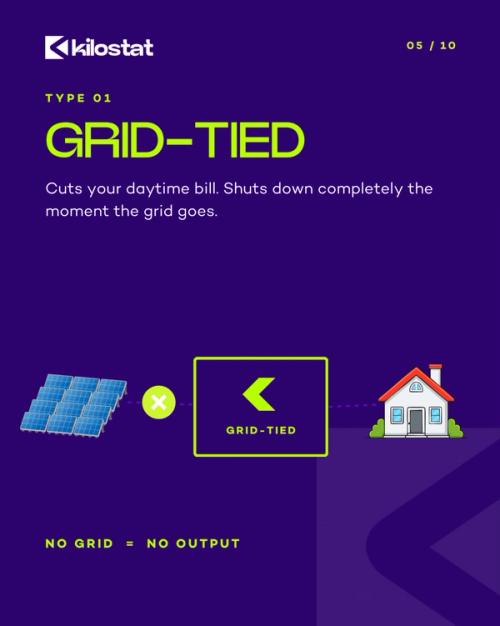
It's the same logic as a car with a full tank of fuel and a dead ignition switch. The fuel is there, the engine is capable, but nothing moves until the connection between them is live. A grid-tied inverter is that dead ignition the second the grid goes down, and no amount of sunlight on the roof changes it.
Off-grid
An off-grid inverter solves an entirely different problem, because it was never built to talk to the grid in the first place. It draws from the panels during the day and batteries after dark, sometimes with a generator behind it for stretches when neither is enough. A blackout elsewhere means nothing to a house running this way, since there's no grid connection to lose.
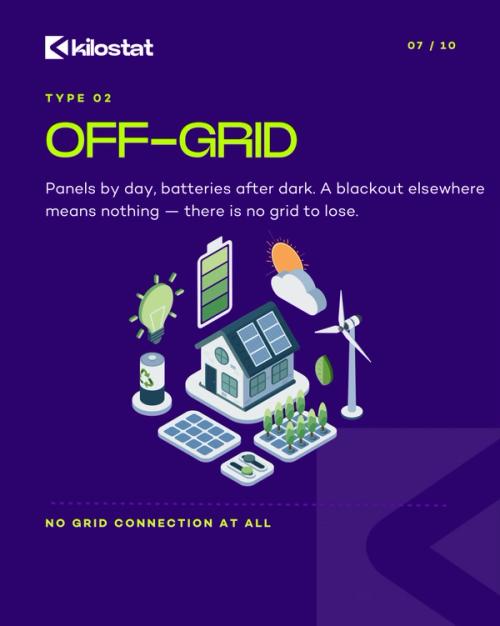
This is the standard setup in places the national grid barely reaches, where the relevant question was never what happens when the power goes out, but what to do given that it was never reliably in.
Hybrid
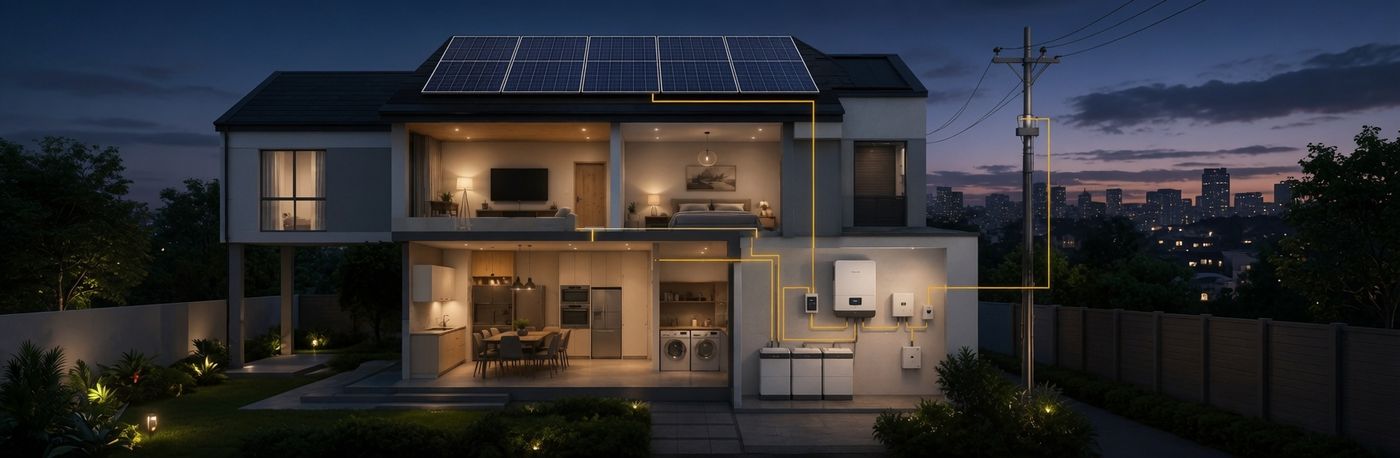
A hybrid inverter stays between the two, and for most Nigerian households, this is the version that actually matches how people live. It draws from the grid when the grid is available, charges batteries in the process, and switches over automatically the moment the power cuts, running the house on a stored battery and whatever the panels are still producing. When the grid returns, it reconnects on its own. No manual switching, no generator startup, no fumbling for a torch. It's built for a country where electricity exists but can't be trusted, which describes most of urban Nigeria more accurately than either of the other two categories.
This is also why two households can install what looks like the same system and end up with completely different experiences the next time the grid fails. One bought solar to shave down a daytime electricity bill. The other wanted the lights to stay on when NEPA didn't. Both installations can be built with excellent equipment and competent workmanship and still produce opposite results, because they were never solving the same problem to begin with. A homeowner who assumed they were buying blackout protection and ended up with a standard grid-tied system isn't dealing with bad equipment. They bought the wrong category of system for what they actually wanted.
Before comparing inverter brands, warranties or prices, the first honest question for any installer is simple:
If the answer involves batteries and automatic switching, that's a hybrid system built for exactly the kind of unreliable power most of the country lives with. If the answer is no, that isn't automatically the wrong choice, since a grid-tied system genuinely lowers a monthly bill and that alone might be enough. But it means signing the contract with clear eyes about what happens the next time the lights go out, instead of finding out in the dark.

Fabian Omini
Energy Analyst
Fabian Omini is an energy analyst with a keen interest in translating complex energy and finance topics into clear, accessible narratives for everyday Africans.