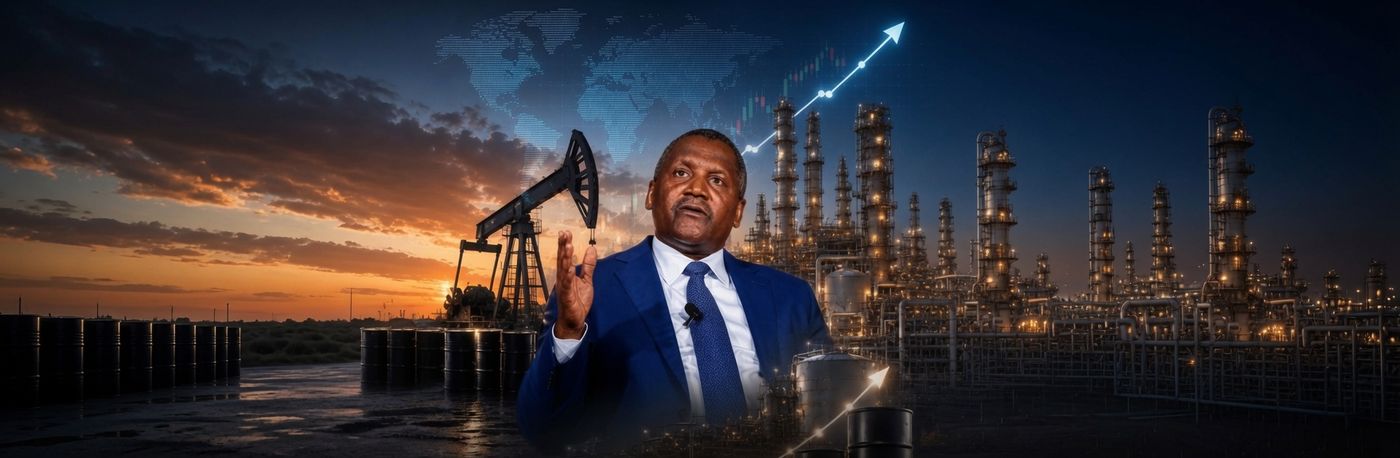
Dangote Refinery Buys More Crude – Why Petrol is Still Expensive
Dangote Is Buying More Nigerian Crude Than Ever. Why Is Petrol Still This Expensive?
Dangote Petroleum Refinery is expected to take more than 16 million barrels of Nigerian crude in June 2026, making it one of the largest single buyers of Nigerian oil. That demand is helping strengthen premiums on Nigerian grades such as Bonga, Escravos, and Bonny Light, which are now trading between $5.50 and $7 per barrel above the Dated Brent benchmark, the global reference price for crude oil, according to Bloomberg data reported by Nairametrics.
For Nigeria as an oil-producing nation, that is good news. Stronger premiums mean Nigerian crude commands a higher price relative to competing grades in the international market. Angola's Dalia crude, for example, is now being offered at a discount to Brent after trading at a premium only weeks earlier, highlighting how demand can quickly reshape the relative value of crude grades.
The complication is that Dangote Refinery is both a beneficiary and a participant in that market. The refinery's crude purchases are tied to international pricing, which means stronger premiums also increase the cost of the crude it buys. While local refining removes some import-related costs, it does not insulate fuel pricing from movements in global oil markets.
That reality has become increasingly visible in domestic petrol pricing. Dangote adjusted its petrol price multiple times during the first quarter of 2026 as crude prices, exchange-rate movements, and competitive pressures shaped market conditions. In early June, data from the Major Energy Marketers Association of Nigeria (MEMAN) showed imported petrol landing at a lower cost than Dangote's gantry price, temporarily improving the competitiveness of imported supplies relative to refinery output.
The development highlights a contradiction at the heart of Nigeria's refining ambitions. The expectation surrounding Dangote Refinery was never simply that Nigeria would refine its own fuel, but that local refining would eventually provide some protection from the volatility of international energy markets.
To some extent, the refinery has already delivered on part of that promise. Earlier this year, Dangote supplied roughly 62% of Nigeria's domestic petrol market, becoming the dominant source of PMS supply and reducing the country's reliance on imported fuel. That matters in a market that has historically experienced fuel shortages, supply disruptions, and long queues whenever imports were constrained.
What local refining has not yet delivered is a complete separation from global pricing dynamics. Crude oil remains a globally traded commodity, regardless of whether it is refined in Lagos, Rotterdam, or Singapore. As long as refineries purchase crude at market-linked prices, local fuel prices will continue to reflect movements in international oil markets, exchange rates, and competition within the downstream sector.
For ordinary Nigerians, that means the benefits of local refining may be felt first in fuel availability rather than lower prices
The refinery's growing demand is helping strengthen the value of Nigerian crude, but stronger crude prices do not automatically translate into cheaper petrol. Whether local refining eventually produces more stable and affordable fuel will depend on factors beyond refinery capacity alone, including crude supply arrangements, exchange-rate stability, and the broader structure of Nigeria's downstream market.
Sources: Nairametrics, "Dangote Refinery Boosts Demand for Nigerian Crude, Drives Oil Premiums Higher," June 13, 2026; NMDPRA, State of the Downstream Sector Report, January 2026

Fabian Omini
Energy Analyst
Fabian Omini is an energy analyst with a keen interest in translating complex energy and finance topics into clear, accessible narratives for everyday Africans.