In 2000, Nigeria had roughly 553,000 telephone lines for 120M+ people. Within 20 years, it jumped to mobile and gained more subscribers than citizens. Can Africa leapfrog electricity too?
Could Africa solve its Energy access crisis using the Nigerian telecom revolution blueprint? - A case study
In 2000, Nigeria had roughly 553,000 fixed telephone lines. The population at the time was north of 120 million. Landline coverage rarely extended beyond city centres and government offices. Large parts of the country were never wired at all. By 2023, Nigeria had more than 224 million active mobile subscriptions. It moved from a threadbare fixed-line system directly into the mobile era, and within two decades mobile lines outnumbered the population.

Development economists call this leapfrogging. The term describes what happens when a country bypasses an intermediate stage of infrastructure and adopts the newer system straight away. Africa did this with telecommunications so quickly that landlines barely registered as everyday technology. A 2015 Pew Research survey across seven sub-Saharan African countries found that a median of only 2% of households had a working landline, even as mobile phone ownership had already reached levels comparable to the United States. Africa built its communications network around mobile technology rather than first laying nationwide copper-wire systems. The question now is whether electricity could follow a similar path.
The Centralised Grid Model
The centralised grid model that underpins most developed economies takes decades to construct and maintain. It depends on generation plants, transmission infrastructure, substations, distribution networks, metering systems, and regulators capable of coordinating the whole apparatus. African countries have spent decades trying to expand these systems, but access growth has often failed to keep pace with population growth.
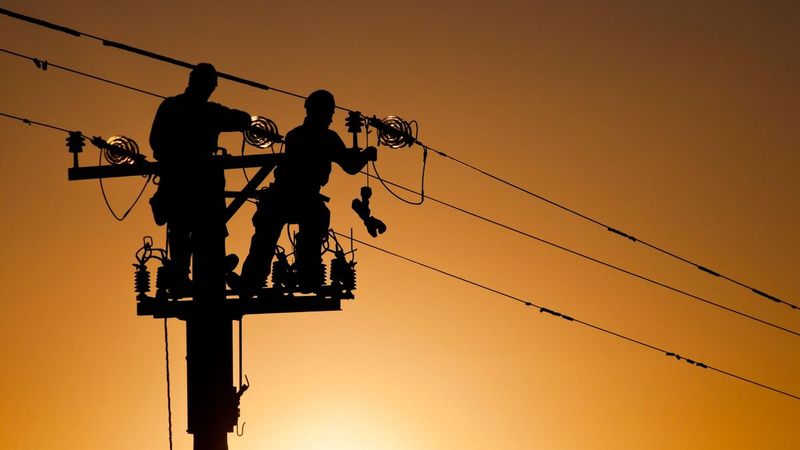
According to the International Energy Agency, around 600 million Africans still lacked access to electricity as of 2024. Sub-Saharan Africa accounts for the overwhelming majority of the global population without power. In many countries the issue is no longer simply whether a connection exists, but what kind of service it actually delivers once someone is connected.
Nigeria lays the problem bare. The country has one of the largest electricity access gaps in the world, despite being Africa’s biggest economy and one of its largest oil producers. Grid collapses remain a regular occurrence. Businesses and households connected to the network continue to depend heavily on petrol and diesel generators because supply is inconsistent, or simply absent for long stretches of the day.
Across much of the continent, formal access numbers often conceal a quality problem underneath. A household may technically be connected while receiving only a few hours of supply daily. Commercial users placed on higher tariff bands still report service levels far below advertised supply targets. The infrastructure exists, but reliability remains weak.
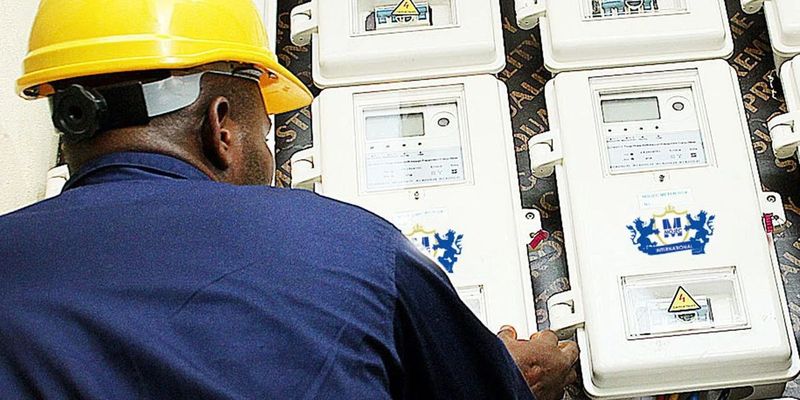
The economic damage is substantial. Research compiled through the Africa Infrastructure Knowledge Program estimates that power outages cost formal enterprises around 6% of annual turnover on average, with considerably higher costs for informal businesses that cannot afford large-scale backup power. Across sub-Saharan Africa, unreliable electricity is estimated to shave more than two percentage points off annual GDP growth in some countries.
The IEA projects that hundreds of millions of Africans could still lack electricity access by 2030 if current trends hold. Extending national grids to every underserved settlement remains technically possible, but the economics gets more complicated,the further a community sits from existing infrastructure.
A different infrastructure model
This is where decentralised solar energy systems could disrupt the status quo. A rooftop solar system with battery storage produces electricity right where it’s consumed. A solar mini-grid can power a village or commercial cluster without a connection to the national transmission network. Generation and consumption happen in the same location. That removes part of the infrastructure chain that conventional grids depend on.
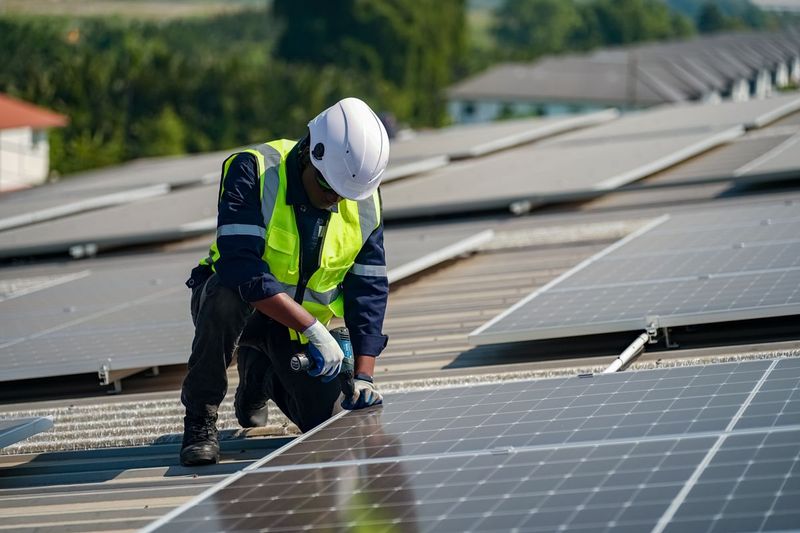
The telecommunications parallel matters because the underlying economics are similar. Mobile networks expanded rapidly across Africa not just because handsets were newer technology, but because mobile infrastructure was cheaper and faster to deploy than nationwide landline systems. A single tower could cover a wide area without requiring physical cable connections to every household.
Grid expansion works differently. Extending electricity into rural or peri-urban areas often means building transmission infrastructure across long distances, installing transformers, constructing distribution lines, and connecting individual users one by one. Costs rise steeply the further communities are from existing infrastructure. Off-grid solar avoids much of that process.
The shift is already visible in the data. According to the Global Solar Council, Africa installed 4.5 gigawatts of solar capacity in 2025, a 54% increase on the previous year. Growth came from both utility-scale projects and distributed systems financed directly by households and businesses. The African Energy Chamber’s State of African Energy 2026 Outlook estimates that the continent invested $34 billion in clean power technologies between 2020 and 2025, with more than half allocated to solar.
The IEA estimates that tens of millions of people in sub-Saharan Africa have already gained basic electricity access through off-grid solar systems. Rwanda is one of the clearest illustrations. By mid-2025, electricity access in the country had risen sharply, with off-grid solar accounting for a substantial share of total connections. Solar is no longer being treated only as a stop-gap while waiting for the grid. In many cases it is becoming part of the permanent infrastructure mix.
The household calculation is shifting
The leapfrog argument is no longer confined to rural electrification. In many African cities, households and businesses already run parallel energy systems. They pay for grid access while also paying for generators, fuel, inverters, and backup batteries because the grid alone cannot reliably support daily activity.
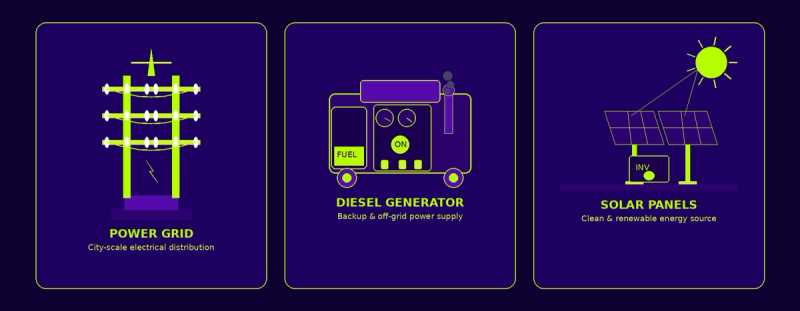
For commercial users in Nigeria, self-generation costs can exceed grid tariffs several times over once fuel, maintenance, and generator wear are accounted for. The official tariff may look lower, but the real cost of electricity includes everything required to keep operations running during outages. That is why solar adoption increasingly looks less like a climate decision and more like a financial one.
A business installing rooftop solar is often trying to cut diesel dependence rather than disconnect from the grid entirely. A household adding batteries and panels is usually responding to unreliability first. In that sense, distributed solar is not replacing the grid outright. It is filling the gap between formal access and “available-for-use” electricity.
The World Bank estimates that distributed renewable systems already represent the least-cost electricity solution for a large share of Africans who still lack access. Solar panel costs have fallen more than 90% over the past fifteen years, according to the IEA, and battery storage prices have followed a similar trajectory, according to BloombergNEF.
What the comparison actually suggests
The mobile phone boom in Africa was not inevitable. It depended on falling technology costs, private capital, expanding consumer demand, and regulatory environments that allowed telecom companies to scale quickly. But once mobile became cheaper and more practical than extending landline systems, adoption accelerated very fast. Solar is developing under similar conditions.
Technology costs have fallen sharply over the past fifteen years. Private financing models are expanding. Businesses and households are increasingly willing to finance their own electricity systems outside the traditional utility structure.
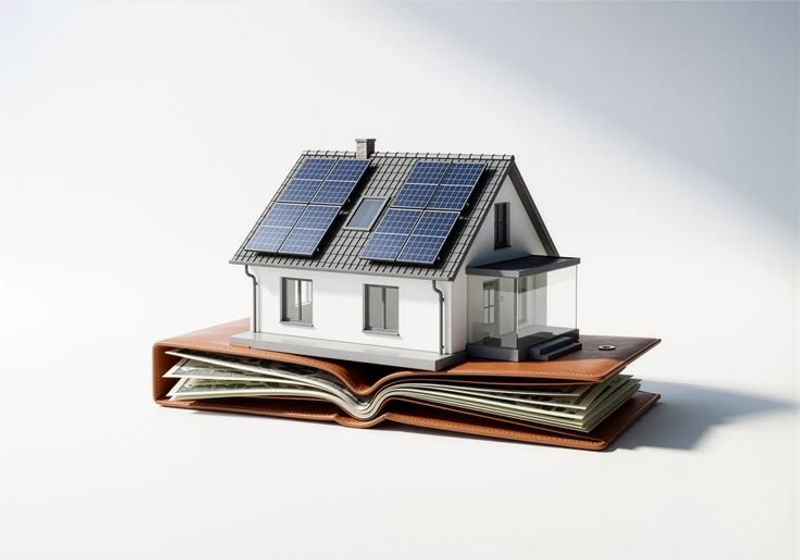
The main obstacle remains upfront cost. A quality solar installation with battery storage still requires more capital than most households can easily afford. Unlike mobile phones, electricity systems cannot be adopted at a very low individual entry cost. Financing remains the bottleneck. But the broader direction is becoming difficult to ignore.
Africa did not wait for universal landline coverage before adopting mobile telecommunications at scale. In electricity, millions of households and businesses are already making a similar calculation. They are choosing systems that can be deployed faster, expanded incrementally, and operated independently of a grid that often struggles to deliver reliable supply.

Fabian Omini
Energy Analyst
Fabian Omini is an energy analyst with a keen interest in translating complex energy and finance topics into clear, accessible narratives for everyday Africans.