Three years after Pi-CNG launch, here’s what actually happened with prices, conversions, stations & adoption in Nigeria.
Nearly Three Years After Nigeria Bet on CNG, Here Is What the Numbers Actually Say
In 2023, when President Bola Tinubu removed the petrol subsidy in his first public address and pump prices jumped from N175 to above N650 per litre overnight, the government reached for an answer: compressed natural gas. The Presidential Compressed Natural Gas Initiative, known as Pi-CNG, was launched that same year with a clear promise. CNG was cheaper, cleaner, locally produced, and available to any Nigerian willing to convert their vehicle. Nearly three years on, some of that promise has been delivered on. Some of it has not. And the gap between the two of them is exactly where ordinary Nigerians need to pay attention.
Start with the price, because that was always the central argument for CNG
When the initiative launched, CNG was selling at roughly N230 per standard cubic metre, the unit used to measure compressed gas at the pump. The cost advantage over petrol was significant and easy to communicate.
What has changed is the price floor
By September 2025, NIPCO Gas and other independent operators had raised pump prices from N230 to N380 per SCM following the expiry of the supply arrangement that had kept prices low during the rollout period. Petrol during the same period traded between N837 and N960 per litre at NNPC retail outlets, depending on location. CNG remains cheaper than petrol on an energy-equivalent basis, but the gap has narrowed considerably since the early rollout period, and it has narrowed fastest for the commercial drivers the initiative was designed to help most.
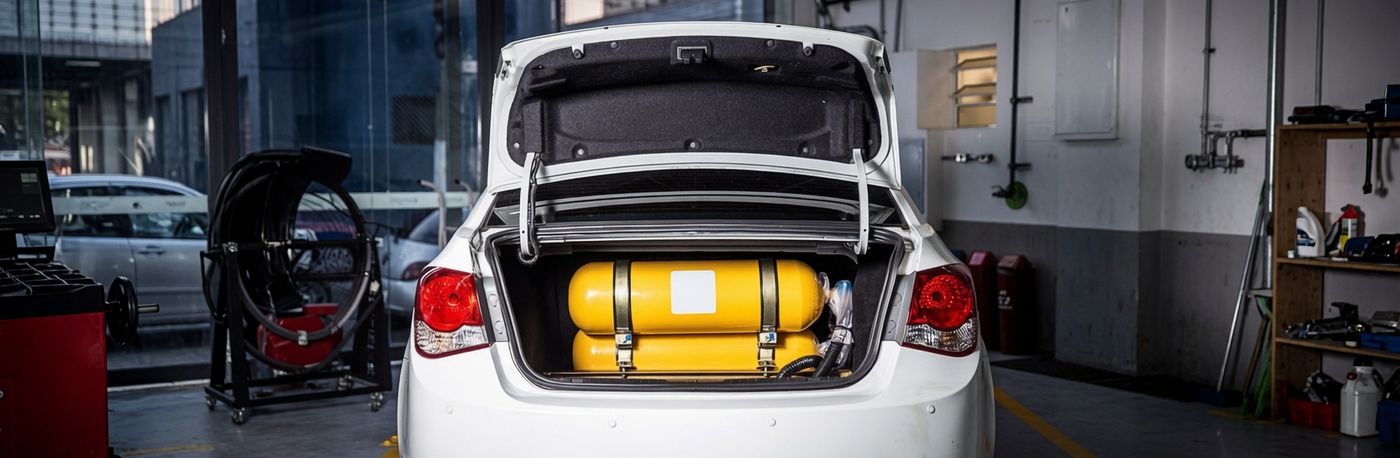
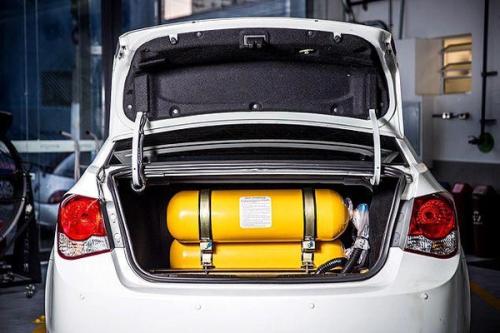
The conversion cost picture is similarly more complicated than the original promise suggested. When Pi-CNG launched, converting a four-cylinder car cost around N456,000. Current market rates range from N350,000 for small cars to N1.7 million for heavy commercial buses and trucks, depending on vehicle class, kit quality, and installation centre. The Presidential Initiative does offer subsidised and free conversion for eligible commercial drivers affiliated with transport unions at approved centres, which has helped a specific category of users. Private vehicle owners bear the full cost themselves. According to World Bank estimates published in 2024, roughly 129 million Nigerians were living below the national poverty line. Against that backdrop, the upfront conversion cost remains one of the most significant structural obstacles to mass adoption.
The kit manufacturing question has not moved as far as early government optimism suggested. When CNG was first pushed as a mass-market solution, one of the quiet vulnerabilities in the plan was that conversion kits and high-pressure cylinders were not manufactured in Nigeria and had to be imported, exposing buyers to exchange-rate pressure and supply unpredictability. That remains largely true today. Most CNG conversion kits used in Nigeria are still imported, although local assembly participation is slowly expanding. Pi-CNG has announced plans for a CNG manufacturing hub in Ajaokuta, Kogi State, with land reportedly secured for the project. Until that facility becomes operational and scales production, import dependency continues to be a cost risk built into every conversion.
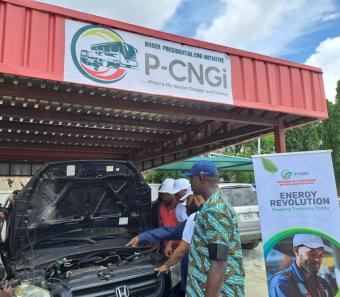
Where real and measurable progress has been made is in infrastructure. The refuelling station network was thin enough at launch that the absence of stations along key routes was a genuine deterrent to conversion. Today, 75 operational CNG stations are running across 20 states, with 337 certified conversion centres nationwide, a figure that has been climbing steadily. NIPCO Gas alone announced plans in early 2026 to roll out 20 additional stations. A new 80-kilometre natural gas pipeline from Sagamu to Ibadan, being constructed under the NNPC-NIPCO partnership, is expected to be completed by mid-2026 and will boost gas supply to industries in Ogun and Oyo states. Progress is real. It is also still thin for a country of Nigeria's geography and vehicle population, where the government's own target of one million CNG vehicles by 2027 would require a network that simply does not yet exist at scale.
Adoption has also moved beyond the pilot stage.
Pi-CNG says more than 100,000 vehicles have now been converted nationwide, up from roughly 11,000 converted vehicles when the programme began in 2023. That growth is substantial by any measure and suggests that fuel-cost savings are compelling enough to overcome at least some of the barriers associated with conversion. Yet it also provides perspective on the scale of the challenge ahead. The government's target remains one million CNG vehicles by 2027, meaning current adoption still represents only about one-tenth of the stated objective.
The technician capacity story has moved more than any other variable, though not necessarily in the direction of quality assurance. When Pi-CNG launched, Nigeria had only a few hundred certified technicians capable of performing safe and reliable conversions, a number far too small to support mass adoption. Today, Pi-CNG reports that more than 7,700 technicians have been trained nationally. The challenge has shifted from quantity to quality. Concerns persist about certification enforcement, the consistency of installation standards across a rapidly expanding network, and the risk that a fast-growing market outpaces the oversight mechanisms designed to keep it safe. A poorly converted vehicle is not a cheaper vehicle but a liability.
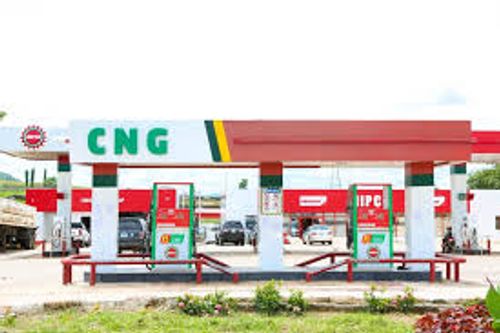
Station availability remains one of the biggest practical barriers to adoption. While the network has expanded significantly, coverage remains concentrated in major urban centres, leaving many drivers outside Lagos, Abuja, and a handful of state capitals with limited access to refuelling infrastructure. For a driver who lives or works outside those corridors, the practical case for conversion can still be weak regardless of what the fuel-cost calculations show on paper.
The broadest case for CNG was also always the most modest one
It was never positioned as Nigeria's energy destination. It was a bridge fuel, a cheaper and cleaner interim option while the country worked toward a more sustainable energy mix. Nothing in the years since has contradicted that framing. If anything, the federal government's own expansion of Pi-CNG to include electric vehicles signals that policymakers themselves view CNG as part of a transitional journey rather than its endpoint.
The economics of CNG still make sense for a commercial driver with access to a nearby refuelling station and a subsidised conversion. They make considerably less sense for a private car owner in a city without reliable station coverage, paying full market conversion rates that move with the naira exchange rate, and hoping the price of the gas does not rise again before the investment pays off. Nigeria's CNG bet has produced measurable infrastructure, real cost savings for some users, and a platform for future expansion.
What it has not yet produced is the broad, affordable, nationally accessible alternative fuel network the original promise implied.
For the Nigerian weighing whether to convert, the honest calculation today is narrower than the government's headline figures suggest: cheaper than petrol, yes, but only if the station is close, the conversion is certified, and the gas price holds.
Sources: Presidential Compressed Natural Gas Initiative (Pi-CNG), Programme Dashboard and Official Updates, accessed June 2026; Punch Newspapers, “Over 4,600 Tricycles, 100,000 Vehicles Run on CNG in Nigeria – Official,” January 2026; Legit.ng, “Filling Stations Announce New CNG Pump Prices Closer to Petrol Cost,” September 2025; Legit.ng, “NNPC Announces New Petrol Price, NIPCO Rolls Out 20 New CNG Stations,” March 2026; Nairametrics, “Nigeria's Gas Future: CNG Retail May Hit N520/SCM to Ensure Commercial Viability,” September 2025; World Bank, Nigeria Poverty Assessment 2024; France 24, “Compressed Natural Gas Vehicles Gain Slow Momentum in Nigeria,” November 2024.

Fabian Omini
Energy Analyst
Fabian Omini is an energy analyst with a keen interest in translating complex energy and finance topics into clear, accessible narratives for everyday Africans.