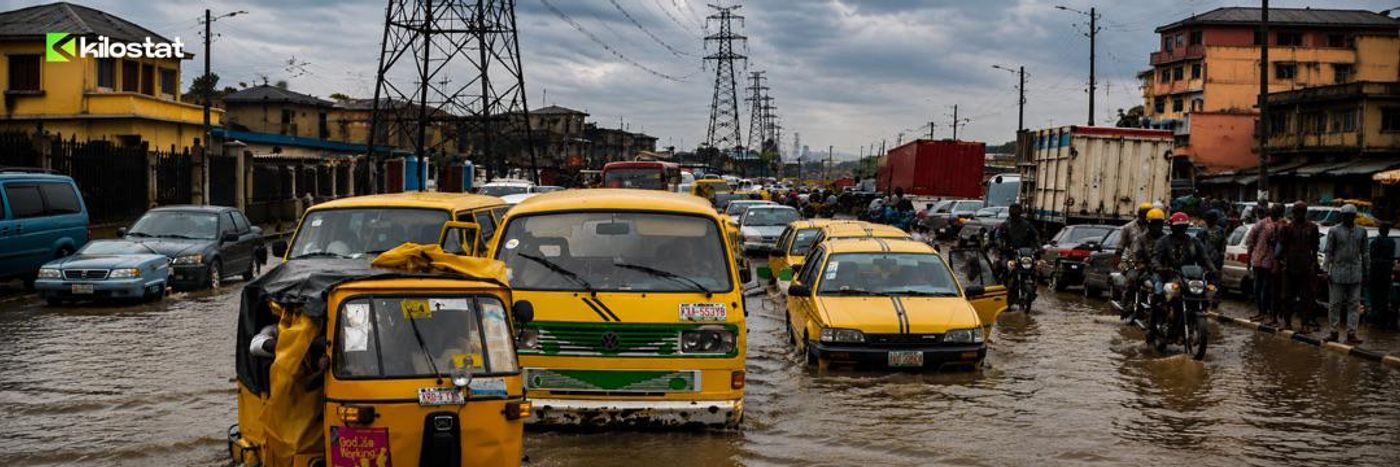
Heavy rains in Lagos flood transformers and substations, causing widespread blackouts. Why rooftop solar offers resilience during floods compared to the grid.
Lagos's Floods Are Becoming an Electricity Problem Too
Every rainy season, parts of Lagos flood. Roads disappear under water, drainage channels overflow, and businesses shut their doors until the water recedes. One consequence receives far less attention: the electricity network that keeps the city running.
The Nigerian Meteorological Agency (NiMet), in its latest flash flood warning covering Lagos and 18 other states, lists power outages among the expected impacts of heavy rainfall, alongside damaged roads, blocked drainage, and disrupted telecommunications. The Federal Government's 2026 Annual Flood Outlook also identifies 14,118 communities across 33 states and the Federal Capital Territory as facing a high risk of flooding, with Lagos among the affected states.
Those warnings come as Lagos's electricity network is already dealing with routine strain. Earlier this year, residents in parts of Amuwo-Odofin were told to expect a planned outage lasting several months while transmission infrastructure underwent maintenance. In April, parts of Apapa spent days without electricity during network upgrade works. Neither incident was caused by flooding, yet both showed how disruptive even scheduled work can be when critical infrastructure is taken out of service.
Floodwater introduces another layer of risk because much of the equipment that distributes electricity sits where floodwater naturally collects. Transformers, substations, switchgear and sections of the distribution network are installed at ground level or below it. Studies examining flood impacts on infrastructure in Nigeria consistently identify electricity installations among the assets most vulnerable to flood damage. Once electrical equipment has been submerged, it cannot simply be switched back on. It must be inspected, tested and, where necessary, repaired or replaced before electricity can be restored safely.
That means a flooded street several kilometres away can leave homes and businesses without electricity even if floodwater never reaches their buildings. Damage anywhere along the local distribution network can interrupt supply to everyone connected to it.
Rooftop solar depends on a different set of infrastructure. The panels are mounted above ground, while batteries and inverters can be installed indoors or raised above likely flood levels. The system is not immune to severe weather, but it is less dependent on the transformers and substations that flooding is most likely to disable. Battery-backed solar also removes the need to run petrol or diesel generators in enclosed or poorly ventilated spaces during floods, reducing the risk of carbon monoxide poisoning.
Floods will still damage property, disrupt transport and close businesses regardless of how electricity is supplied. They can also damage poorly installed solar equipment. But relying on rooftop generation means a household is less exposed to failures elsewhere on the distribution network, where floodwater causes the greatest disruption.
Most households considering solar focus on the upfront cost and how many years it will take the system to pay for itself. Flood resilience rarely enters the conversation. In a city where heavy rainfall is becoming a recurring test of public infrastructure; it probably should. Lagos's floods have long been viewed as a transport problem and a housing problem. They are increasingly becoming an electricity problem as well.
Sources: Nigerian Meteorological Agency (NiMet), Flash Flood Warning, May 2026; Nigeria Hydrological Services Agency (NIHSA), 2026 Annual Flood Outlook, April 2026; Nairametrics, Lagos Community May Face Four-Month Blackout Over 132kV Substation Maintenance, March 2026; Frontiers in Sustainable Resource Management, Drowning in Urban Growth: Rethinking Flood Resilience and Spatial Equity in Lagos, Nigeria, 2025.
Fabian Omini
Energy Analyst
Fabian Omini is an energy analyst with a keen interest in translating complex energy and finance topics into clear, accessible narratives for everyday Africans.