Aliko Dangote is taking his refining business beyond Nigeria, and the first major project outside the country could have a financing model that Nigerians will recognise.
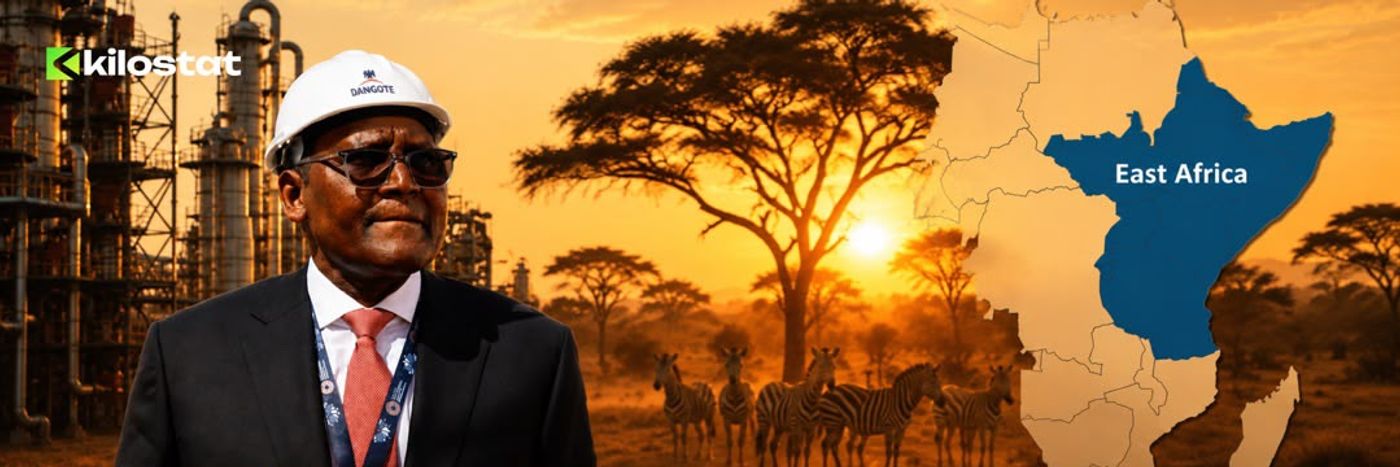
Dangote has offered East African countries a combined 30% stake in a planned refinery in Kenya, with Kenya considering a 10% stake worth about $500 million and Ethiopia and Rwanda also expressing interest. The proposed refinery is expected to be built in Lamu, on Kenya's coast, after the project was moved from Tanzania. The regional stake could be worth about $1.5 billion if all three countries participate at the level currently being discussed.
The project is much larger than the ownership offer suggests. Kenyan President William Ruto's economic adviser, David Ndii, said the refinery itself could cost about $16 billion, while the wider project, including a petrochemical complex and port infrastructure, could reach $20 billion. Construction is expected to begin after the planned September 2026 groundbreaking, with the project targeted for completion in less than four years. Dangote has described the move from Tanzania to Kenya as a commercial and technical decision, rather than a political one.
The choice of Kenya is important because Dangote is not simply building another refinery for the Kenyan market. The proposed facility would sit on the East African coast, giving it access to a region that depends heavily on imported petroleum products. Kenya is already a major fuel-importing market, while neighbouring countries such as Uganda and Rwanda also rely on imports to meet much of their petroleum demand. A refinery located at Lamu could therefore serve several markets rather than being built around the demand of one country.
That is also why the proposed equity structure matters.
Kenya, Ethiopia and Rwanda could become investors in the facility itself, not just customers buying fuel from a Dangote-owned refinery. Ndii said Dangote was prepared to support countries that could not commit as investors by taking crude or refined products from the project instead. That gives the refinery a potential customer base before it starts producing, while giving participating countries a financial interest in an infrastructure project that could supply their own markets.
The project also shows how different Dangote's position is from that of most Nigerian businesses trying to expand abroad. He already has a working 700,000-barrel-per-day refinery in Lagos, a large domestic market around it and an established trading operation. The proposed Kenyan project would be built on the experience and infrastructure created in Nigeria, but its economics would depend on a different market, different logistics and the ability to move products across East Africa.
For Nigerians, however, the more interesting part of the story may be happening at home.
Dangote has been preparing to take the Nigerian refinery to the capital market, meaning Nigerians could eventually buy into the business through shares rather than simply buying its products. The company has been raising money ahead of a proposed public offering, with reports putting the planned IPO at up to $5 billion and the refinery's valuation at about $40 billion. A $2.5 billion private placement has also been reported as part of the financing process.
That creates an unusual situation. The same refinery business that is seeking Nigerian investors is also trying to raise capital for expansion across Africa. If the Nigerian IPO goes ahead as planned, an individual investor would not just be buying into a company that sells petrol in Nigeria. They would potentially be buying into an energy business whose ambitions extend into other African markets, including a proposed refinery in Kenya.
The scale of the Nigerian operation explains why the expansion matters. Dangote Petroleum Refinery can process up to 700,000 barrels of crude per day, making it one of the largest single-train refineries in the world. Dangote Industries has also been pursuing plans to expand the Nigerian facility while using the capital markets to bring in additional funding. The company is therefore trying to build something larger than a refinery that replaces imported petrol — it is building a refining business capable of supplying several markets.
That ambition changes the way Nigerians should look at the proposed IPO. Buying shares in the refinery would be different from buying into a conventional Nigerian manufacturing company whose growth depends almost entirely on domestic demand. A refinery with access to international markets can earn from selling petroleum products outside Nigeria, while its investors would also carry the risks that come with a capital-intensive business: crude supply, refinery operating costs, foreign exchange movements, product prices and competition from other refineries.
The Kenyan project introduces another layer of that risk. Dangote's Lagos refinery benefited from being built in Nigeria's largest petroleum market, close to the country's major centres of fuel consumption. The Lamu refinery would have to compete in a regional market where imported products already move between countries and where governments have different tax regimes, fuel standards and policies. Building the infrastructure is only one part of the challenge. Keeping the refinery supplied with crude and finding enough customers for its output at profitable prices will determine whether the investment works.
The proposed regional ownership structure could help with that problem. If governments become shareholders, they have a financial interest in the refinery succeeding. If they also commit to buying products from it, Dangote gets something every large refinery needs: a dependable market for its output. That could make the East African project easier to finance than a refinery built without committed customers or strategic investors.
It also fits into a broader change in Africa's petroleum market. Countries that currently spend billions of dollars importing refined products are increasingly looking at domestic and regional refining as a way to reduce their exposure to international supply disruptions, freight costs and foreign exchange pressures. Nigeria is already part of that shift through the Dangote refinery and the return of other domestic refining capacity. Dangote's proposed move into East Africa suggests the business opportunity may extend beyond simply supplying Nigeria.
There is a straightforward reason Dangote would want that expansion. A refinery is expensive to build and expensive to keep running, so its economics improve when it can sell into a large market. East Africa gives Dangote access to several countries without having to build a separate refinery in each one. The proposed Kenyan location also gives the project direct access to the sea, which matters for importing crude, exporting refined products and moving fuel to other markets.
But the project is still a proposal. The equity interests discussed for Kenya, Ethiopia and Rwanda have not turned the refinery into a completed investment, and the project still has to move from financing discussions to construction and eventually production. A refinery of this size can face delays, cost increases and financing problems before a single barrel of crude is processed. The fact that governments are interested in taking stakes is significant, but it is not the same thing as a completed transaction.
For Nigerians watching the proposed IPO, that distinction matters too. The opportunity to buy shares in Dangote's refinery could give ordinary investors access to a business with ambitions far beyond the Nigerian fuel market. But the attraction should not be confused with a guarantee of returns. A large refinery can generate enormous revenue and still face periods when margins are weak, costs rise or expansion projects require more capital than expected.
What is becoming clearer is the direction of Dangote's strategy. The company is increasingly looking at where Africa's fuel demand is growing, where refining capacity is limited and where governments may be willing to invest alongside private capital, well beyond how much fuel Nigeria alone can consume.
The proposed Kenyan refinery is the clearest sign yet that Dangote wants to turn the business created in Lagos into a regional refining platform.
If the IPO goes ahead, Nigerians will have a chance to decide whether they want to own a piece of that expansion. The East African project makes that question more interesting because the investment would potentially extend beyond the refinery Nigerians already know. It could become a stake in an African refining business whose next customers may be thousands of kilometres from Lagos.
Sources: Nairametrics, "Dangote offers East African countries 30% stake in planned $17 billion refinery," August 21, 2026; Nairametrics, reporting on Dangote Petroleum Refinery's $1 billion underwriting programme and proposed IPO, August 2026; Premium Times, reporting on Dangote Refinery's proposed $5 billion IPO and $40 billion valuation; Dangote Industries Limited, statements on the proposed Kenya refinery and expansion plans; Kenyan government officials' statements on the proposed Lamu refinery and regional investment.

Fabian Omini
Energy Analyst
Fabian Omini is an energy analyst with a keen interest in translating complex energy and finance topics into clear, accessible narratives for everyday Africans.