In February 2026, Nigeria's electricity DisCos billed N242.29 billion but recovered only N196.68 billion. The gap runs deeper than unpaid bills. This piece explains why.
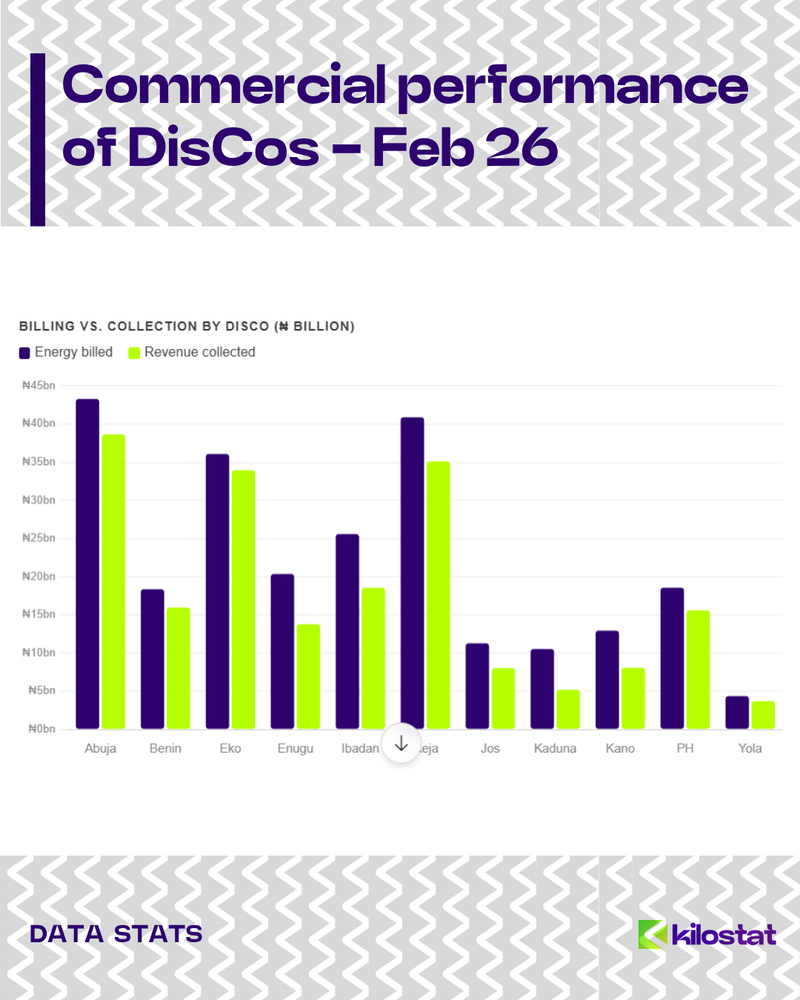
In February 2026, Nigeria's electricity distribution companies sent out bills worth N242.29 billion to homes and businesses across the country. By the end of that month, they only managed to collect N196.68 billion. About N46 billion was not recovered within the month.
But that N46 billion is only a part of the picture. Before billing even began, DisCos had received electricity worth N277.09 billion from the grid. The gap between what was received and what was billed represents another N34.8 billion in unrecovered value across the sector for that month alone.
The companies responsible for delivering power to your home or office, called Distribution Companies or DisCos, are supposed to recover enough money from customers to cover the cost of the electricity they distribute. That money funds repairs, maintenance, and improvements to the electricity network. The sector loses money at two stages: some electricity supplied to DisCos is never fully captured in customer billing, and a portion of the issued bills are never paid. Together, those gaps weaken the financial position of the entire electricity market.
Think of it like a shop owner who sells on credit. If enough customers do not pay, there is less money to restock or repair. In the power sector, that means ageing infrastructure, delayed maintenance, and the same darkness Nigerians have been living with for decades.
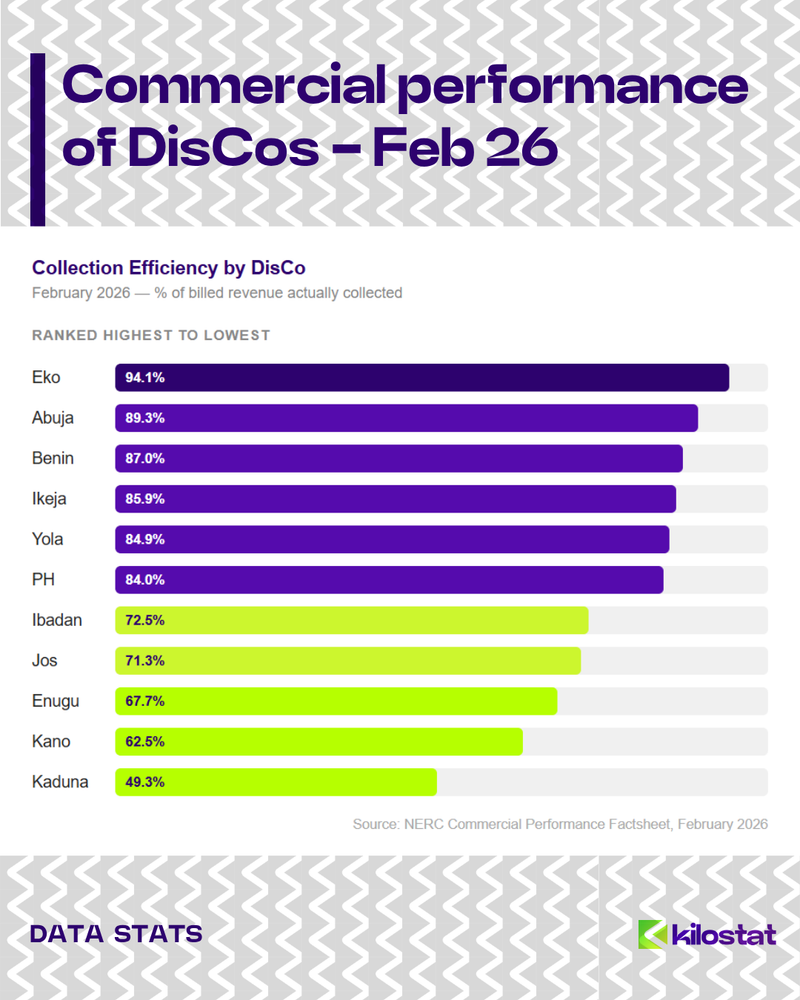
The February data from NERC shows that collection efficiency across all DisCos averaged 81.17%. In simple terms, that means for every N100 billed, only N81 was collected. But the situation looks very different depending on where you live. Eko DisCo, which covers parts of Lagos, collected 94.12% of what it billed which is a stark contrast to Kano DisCo which billed customers for most of the power allocated to it, but only collected 62.49% of those bills. The gap between the most and least efficient DisCos in terms of revenue collection reflects a reality which many Nigerians already know: the quality of your electricity service depends heavily on which part of the country you live in.
How so, you may ask? DisCos operating in zones with higher concentrations of metered customers, stronger commercial activity, and more industrial consumers tend to collect more revenue and reinvest more into their networks. In zones where metering is sparse, informal settlements dominate, or economic conditions make consistent payment difficult, collections fall short, maintenance gets deferred, and the infrastructure deteriorates faster. Where your DisCo sits on that spectrum determines the electricity experience you live with.
When others do not pay, the shortfall gets factored into future tariff increases, deferred maintenance, and a sector that never quite has enough money to fix itself. In a single month, about N46 billion billed by DisCos was not recovered. Customers who pay consistently still experience poor service because revenue shortfalls reduce the money available for infrastructure improvements. This helps explain why electricity supply remains unreliable even for non-defaulters.
Source: NERC Commercial Performance Factsheet, February 2026.

Fabian Omini
Energy Analyst
Fabian Omini is an energy analyst with a keen interest in translating complex energy and finance topics into clear, accessible narratives for everyday Africans.