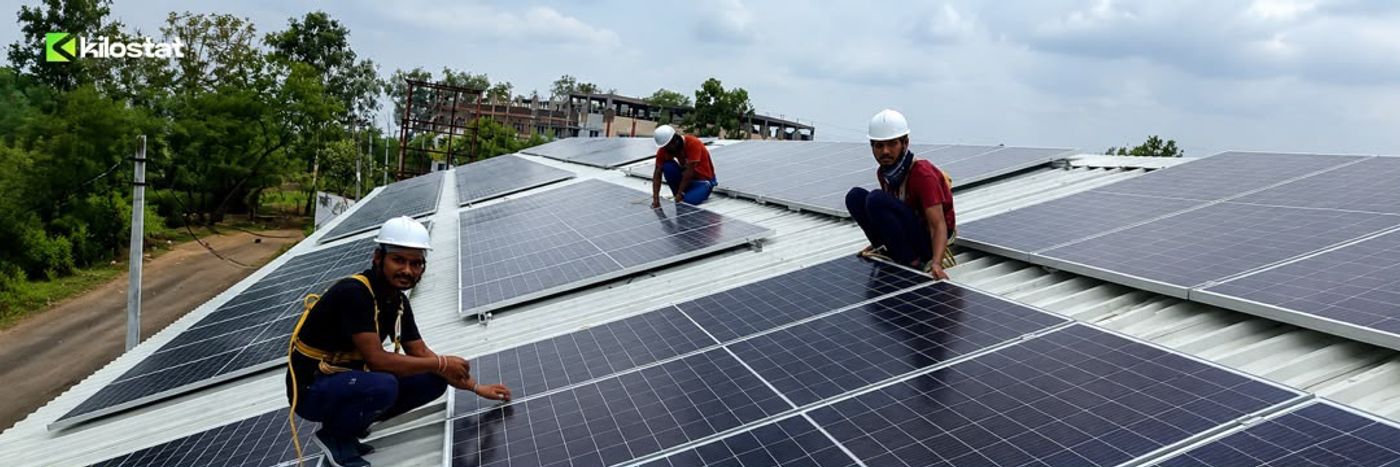
Ubuntu Energy connects homes to nearby rooftop solar systems for cheaper neighbourhood power. How peer-to-peer sharing uses existing solar to cut generator costs without the national grid.
Nigeria's Next Power Plant Could Be Your Neighbour's Roof
Every sunny afternoon across Nigeria, rooftop solar systems generate more electricity than their owners can use. Most of that surplus simply cannot be used by anyone else because it has nowhere else to go. Ubuntu Energy, a clean tech company in collaboration with Greenage Technologies, wants to turn that unused electricity into a neighbourhood power market.
Instead of asking every household to install its own solar system, Ubuntu Energy wants to connect nearby homes to existing rooftop installations that already produce more electricity than their owners consume. In effect, a shop, school or office building with spare solar capacity becomes a small neighbourhood power station. It shifts the conversation from generating more electricity to making better use of electricity Nigerians have already produced.
Public debate often centres on how little electricity the national grid delivers. However, the national grid is only one part of Nigeria's electricity system. Everyday, homes and businesses generate their own power through generators and rooftop solar installations. Chukwuemeka Nwangele, Director of Greenage Technologies and Ubuntu Energy, estimates that Nigerians have privately installed about 44 gigawatts of diesel generator capacity and another 5 to 7 gigawatts of rooftop solar. Those figures have not been independently verified by a regulator or research institution and should be treated as industry estimates rather than official statistics.
Even so, they point to something few Nigerians would dispute: households and businesses have spent years building their own electricity systems because the grid could not meet their needs. Ubuntu Energy is built around a simple question:
What if that privately owned electricity did not stop at the property where it was generated?
The project has attracted international backing
It is one of five demonstration projects selected under the Accelerate to Demonstrate (A2D) Facility, a programme run by the United Nations Industrial Development Organization (UNIDO) and funded through the UK government's £65 million Ayrton Fund. According to UNIDO, the Nigerian project will demonstrate a peer-to-peer renewable energy sharing system designed to connect existing solar photovoltaic sites with nearby consumers, particularly women-led businesses, low-income households and solar system owners.
Countries such as the United States and Australia use net metering, where households with excess solar electricity export it back to the national grid in exchange for bill credits. Nigeria's electricity network is not yet designed for widespread two-way power flows of that kind. Ubuntu Energy takes a different approach by keeping electricity within the neighbourhood where it is generated.
Consider a school building with a rooftop solar system
By late-afternoon, occupancy has fallen and electricity demand inside the building has eased, even though the panels are still generating power. Rather than letting that surplus go unused, the system is connected through low-voltage cables to nearby homes. Those households pay for the electricity through a mobile payment platform, while the school earns additional income from an asset that would otherwise sit idle. The result is a neighbourhood electricity market that operates without sending power through the national grid at all.
According to Mr. Nwangele, a household joining the network, needs a connection device costing about USD20. In comparison, buying a standalone solar home system can cost around USD1000 depending on its size and battery capacity, while running a petrol or diesel generator exposes households to fuel costs that continue to fluctuate.
Greenage Technologies says most users recover the cost of the connection device within about a month through fuel savings. Electricity purchased through the network is then priced at less than 40% of the cost of generating the same amount of power with diesel. Those figures have not been independently verified and should be treated as company estimates. Regardless of the exact figures, the economic logic is straightforward: connecting to an existing solar system is significantly cheaper than buying a new one because the most expensive components, the solar panels and much of the supporting infrastructure, have already been purchased and installed.
The demonstration project is also intended to lower the barrier to entry. Nwangele says the UK government has funded the first set of 2,000 pilot installations, which means the first set of beneficiaries would get this for free. There are already 200 existing solar PV sites in Enugu and with expansion efforts looking to Kano, Abuja and Lagos. Those figures come from the company rather than UNIDO's own published materials.
The model also raises an interesting question about how electricity infrastructure is protected
Many publicly funded electrification projects have struggled with theft and vandalism, particularly where local communities have little sense of ownership. Nwangele believes neighbourhood energy networks create different incentives because the people benefiting from the infrastructure also have an interest in keeping it operational. Greenage has also developed machine-learning tools to identify unusual consumption patterns that may indicate tampering, although the company's view is that community ownership offers a more durable form of protection than technology alone.
There are still regulatory questions to answer before systems like this become commonplace. The Electricity Act 2023 gave Nigerian states greater authority over electricity markets, allowing them to establish their own regulators. Lagos and Enugu have already done so, meaning projects like Ubuntu Energy must increasingly work within state-level regulatory frameworks rather than relying solely on national rules. Mr. Nwangele says Greenage is engaging regulators as the technology evolves, arguing that the legal framework should adapt to new ways of producing and sharing electricity rather than waiting until every question has already been answered.
Whether Ubuntu Energy succeeds remains to be seen. What is already clear is that the project challenges one of the assumptions behind Nigeria's electricity crisis. Expanding generation will remain essential, but it is no longer the only way to increase access to electricity. Millions of Nigerians already own generators and solar systems that collectively produce enormous amounts of private power every day. Much of that electricity never travels beyond the buildings where it is generated.
The cheapest new electricity available to many Nigerians over the next few years may not come from another power plant, another transmission line or another generator purchase, but from connecting to solar panels that have been sitting a few streets away all along.
Sources
- Channels Television, The Morning Brief interview with Chukwuemeka Nwangele, July 2026.
- United Nations Industrial Development Organization (UNIDO), UNIDO Announces First Demonstration Projects Under the Accelerate to Demonstrate (A2D) Facility, March 2025.
- Punch, "UNIDO Unveils Facility to Boost Clean Energy," July 2024.

Fabian Omini
Energy Analyst
Fabian Omini is an energy analyst with a keen interest in translating complex energy and finance topics into clear, accessible narratives for everyday Africans.