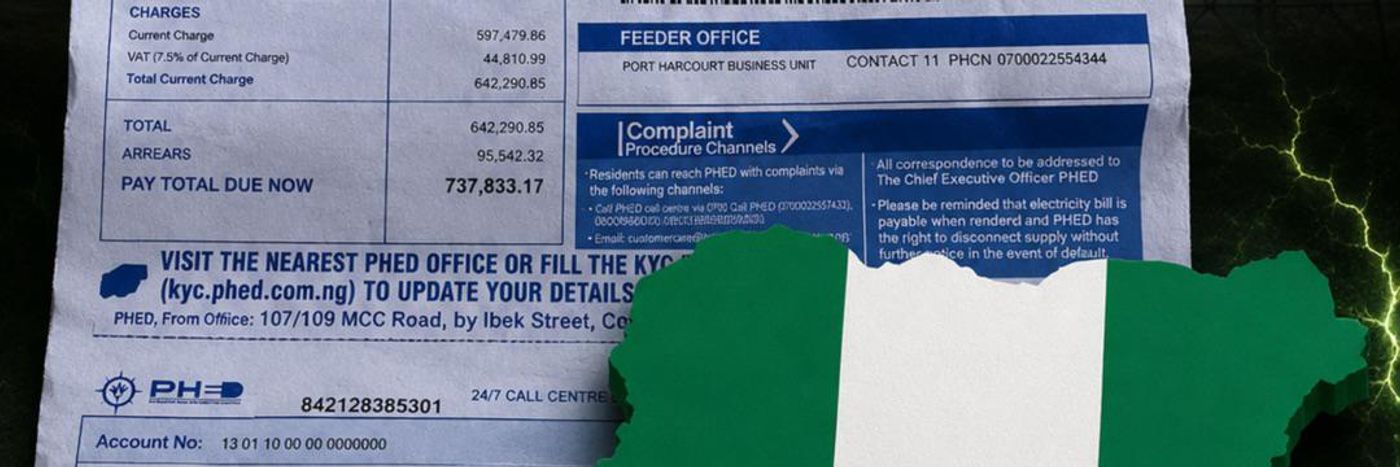
This piece breaks down how Nigerian electricity bills differ across prepaid, postpaid, and unmetered customers, and shows how tariff bands under the Service-Based Tariff system directly shape what households pay.
Before You Pay That Electricity Bill, Read It
Not every Nigerian pays for electricity the same way. Some households have prepaid meters and buy electricity before they use it. Others have postpaid meters and receive a monthly bill based on their consumption. Millions of customers still do not have meters and are billed based on estimates.
That means the documents people receive look different. This explainer focuses mainly on the monthly bills issued to postpaid and unmetered customers, while also explaining what prepaid customers should look out for.
Start with the customer information at the top of the bill
You should see your name, service address, account number, the billing period, and, if you have one, your meter number. These details identify both the customer and the month being billed. If any of them are incorrect, the rest of the bill deserves a closer look before payment is made.
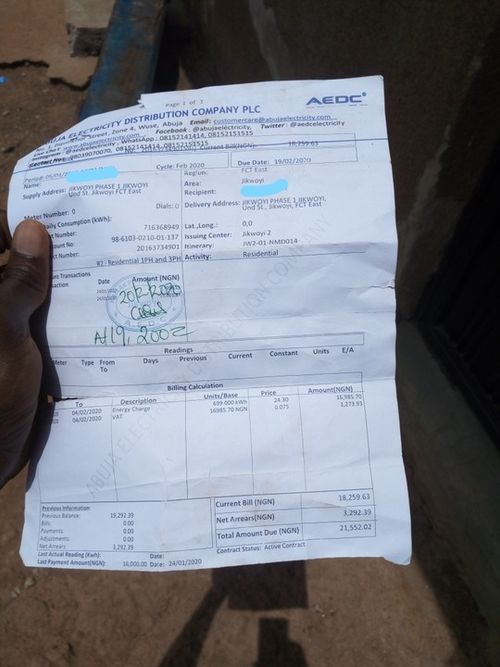
Your bill should also indicate the tariff under which you are being charged. Most residential customers fall under Nigeria's Service-Based Tariff framework, which groups customers into Bands A to E according to the minimum hours of electricity supply they are expected to receive each day. Band A customers are expected to receive at least 20 hours of supply daily and therefore pay the highest tariff. Customers in the lower bands pay progressively lower tariffs because they receive fewer hours of supply.
The largest figure on the bill is usually the energy charge. This is based on the amount of electricity you used during the billing period, measured in kilowatt-hours, or kWh. One kilowatt-hour is simply one unit of electricity. Every appliance in your home contributes to that total. Your refrigerator, fans, television, lighting, pumping machine, and air conditioner all consume units at different rates.
The more units your household uses, the higher your bill will be
If you have a postpaid meter, the bill will normally show your previous meter reading, your current meter reading, and the difference between the two. That difference is your electricity consumption for the month. It is worth checking those figures occasionally, especially if your bill appears unusually high or low.
If your property does not have a meter, the bill should indicate that your charges are estimated rather than based on an actual meter reading. Estimated billing remains common in many parts of Nigeria, although NERC has continued to push distribution companies to meter more customers. If you believe an estimated bill does not reflect your actual consumption, you can ask your DisCo to review it or escalate the complaint through NERC's customer complaint process if the issue is not resolved.
Prepaid customers will not usually receive a monthly electricity bill. Instead, they receive a receipt whenever they purchase electricity tokens. That receipt shows how much was paid, how many units were purchased, and the tariff applied. Keeping those receipts makes it easier to track your electricity consumption over time and compare how quickly your household is using energy from one month to the next.
One section that deserves attention on any monthly bill is the previous balance
This is money carried forward from an earlier billing period. It should be shown separately from the current month's charges so that you can tell what you owe for this month and what has been brought forward from previous bills. If you are disputing an earlier charge, compare the amount carried forward with your own records.
Customers who paid for their own meters under the Meter Asset Provider (MAP) programme have one additional item to watch for. Earlier this year, NERC directed distribution companies to reimburse eligible customers through credits applied over time. If you purchased your meter under the programme and those credits have not started appearing, it is worth asking your DisCo how the reimbursement is being implemented.
Before paying any electricity bill, take a minute to read beyond the amount due. Check that your customer details are correct, confirm that the tariff applied matches your service band, make sure the consumption shown is reasonable, and look for any balance being carried forward from previous months. Those few minutes can help you spot mistakes that might otherwise go unnoticed.
An electricity bill is more than a payment request
It is a regulated document, and every major charge on it is governed by rules issued by the Nigerian Electricity Regulatory Commission. Knowing what the numbers mean makes it much easier to know when something deserves to be questioned.
Sources: NERC, Service-Based Tariff Framework; NERC, Order on the Reimbursement of Meter Costs under the Meter Asset Provider (MAP) Framework, March 2026; NERC, Multi-Year Tariff Order (MYTO).

Fabian Omini
Energy Analyst
Fabian Omini is an energy analyst with a keen interest in translating complex energy and finance topics into clear, accessible narratives for everyday Africans.